
New Govt Platform Set to Boost Opportunities for Disabled Workers Across NZ Industry
A Turning Point for Industry and Disabled Workers
A new government backed multimedia platform is reshaping how New Zealand industries recognise and engage disabled workers. Released as the country prepares for rising demand for skilled labour, the initiative offers employers practical guidance to widen their recruitment lens and access capability that has been left on the sidelines for decades.
The manufacturing, engineering and logistics sectors are entering a period of sustained growth as infrastructure investment accelerates. The Government’s Infrastructure Pipeline, valued at over $237 billion, shows long term demand for technical talent that New Zealand is struggling to supply. Employers continue to lose skilled labour to Australia which adds more pressure to an already stretched workforce. This has created an environment where attracting, retaining and upskilling disabled workers is no longer a social aspiration. It is an economic requirement.
Why Disabled Workers Are a Missed Opportunity
Workforce development council Hanga Aro Rau has led the creation of the platform after research showed deep structural barriers preventing disabled New Zealanders from participating fully in work. Labour market data shows disabled adults have a participation rate of 44 percent while non disabled adults sit at 83 percent. At the same time the combined sectors of manufacturing, engineering and logistics are forecast to face 156,000 vacancies by 2030.
The Government funded Let’s Level Up report estimated more than 268,000 disabled adults represent a capable ready workforce that could ease these shortages. If participation rates matched those of non disabled workers the economy would see a benefit of up to $1.45 billion. The study also highlighted the human experience behind the statistics. Many disabled workers reported paying for their own workplace adjustments while others avoided disclosing their disability due to stigma or fear of losing their job.
These findings underline what employers have been saying quietly for years. They want to create inclusive workplaces but lack tools to start. Forty three percent of employers had never discussed disability in their organisation and only a small portion used inclusive recruitment processes.
An Industry Led Platform Designed for Real Workplaces
Hanga Aro Rau deputy chief executive Samantha McNaughton says the platform was built to serve the specific needs of manufacturing, engineering and logistics employers rather than offering generic advice. She says the country is in a period where experienced workers are retiring and recruitment demands are rising. This means employers must connect with talent pools that have been overlooked including Māori, Pacific peoples and disabled workers.
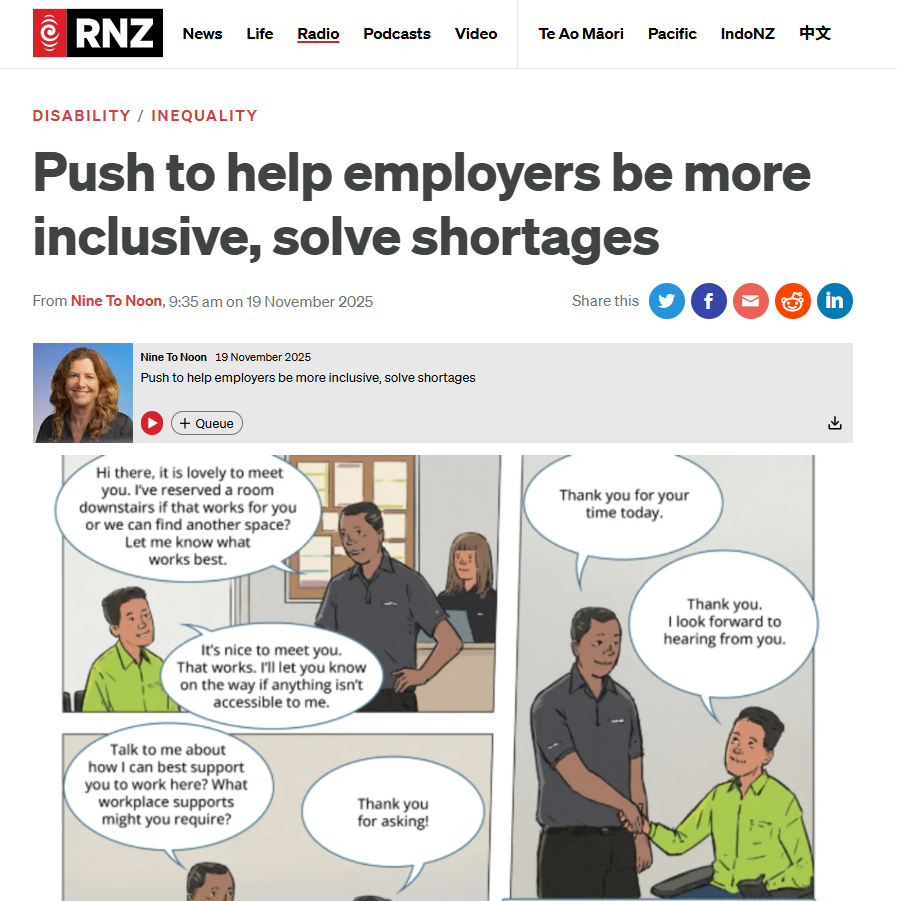
McNaughton says many disabilities are invisible which creates uncertainty for managers who want to do the right thing but feel underprepared. The platform uses videos, podcasts, guides and interactive tools to show what inclusion looks like in real workplaces and to build confidence rather than compliance.
The project was co designed with accessibility consultancy All is for All to ensure the content is engaging and easy to put into practice. Chief executive Grace Stratton says employers wanted quick accessible resources that supported immediate action. The toolkit includes conversation cards, short videos and step by step guides that help teams start constructive dialogue about inclusion.

Industry Leadership Is Essential to Unlocking Talent
McNaughton says the platform was shaped with input from industry groups and the vocational education system to embed accessibility into training and qualification design. Her aim is to normalise disability inclusion as a standard part of New Zealand’s workforce.
Engineering New Zealand chief executive Dr Richard Templer says the profession already includes a significant number of neurodiverse specialists whose structured thinking and spatial reasoning skills are vital to innovation. One major engineering firm found around 15 percent of its workforce identified as neurodiverse which sits above the national average.
Templer says the greatest barrier is often the fear of saying the wrong thing rather than concerns about capability. He says inclusion starts with simply asking what a person needs to thrive. As global competition for engineering talent intensifies New Zealand cannot afford to overlook people who think differently or who do not fit traditional pathways.
He says inclusive workplaces are built through systems such as recruitment, mentoring and design rather than slogans. Neurodiverse engineers often offer distinctive problem solving abilities that lead to breakthroughs and industry wide gains. Education pathways must also evolve to ensure disabled and neurodiverse students can succeed. Excluding any person from work represents lost capability in an economy already stretched to meet demand.
What This Means for New Zealand’s Future Workforce
The platform acts as a one stop resource hub for employers, trainers and educators. It provides clear guidance on recruitment, retention and workplace adjustments. It also helps organisations understand how to build psychologically safe environments where disabled workers can contribute confidently.
Coverage of the launch appeared in major national outlets including 1News and NZ Herald which signals growing recognition of the issue across the wider public sector and industry. The platform’s designers hope its practical format will accelerate meaningful change and unlock a generation of skilled disabled workers whose potential has been undervalued.
For organisations wanting strategic communication support around sector transformation and workforce issues, partnering with one of the top PR agencies new zealand businesses turn to can help shape narratives, build stronger industry engagement and elevate the visibility of these initiatives.
About Impact PR
Impact PR is a specialist communications consultancy working across workforce development, technology, health, sustainability and industry transformation. The agency supports organisations that are navigating change and seeking to lift their national profile through strategic storytelling. Impact PR works with government agencies, large corporates and innovators to translate complex data into clear compelling narratives that reach decision makers. The team has extensive experience delivering campaigns in manufacturing, engineering and logistics which positions the agency well to support projects focused on disabled workers and inclusive employment. To learn more about creating communication strategies that shift public understanding, visit Impact PR online.
External source: New Zealand labour market data